Abstract:
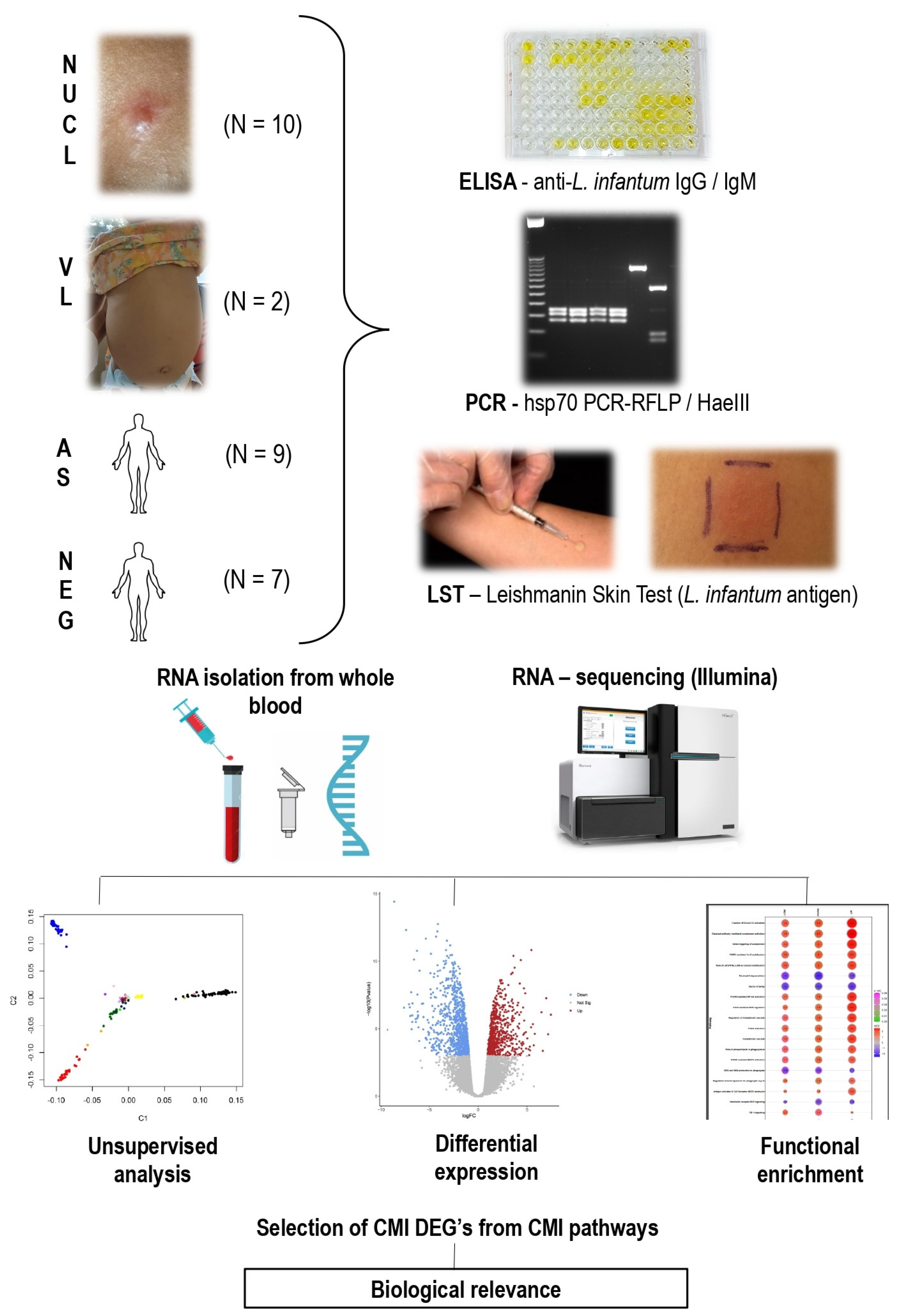
Leishmania (Leishmania) infantum chagasi infections range from asymptomatic (AS) to severe visceral leishmaniasis (VL). One of the manifestations is an atypical non-ulcerated cutaneous leishmaniasis (NUCL), which occurs in some locations of Central America with few cases of VL. We conducted a transcriptomic analysis of cell-mediated immunity (CMI) on blood samples from NUCL, AS, VL patients from Amapala, Honduras, and healthy controls. RNA-seq revealed a similar perturbation of gene expression in NUCL and AS. Eight gene signatures of CMI were found in NUCL involved in CD8+ T lymphocyte infiltration, reactive oxygen species generation, PD-1 receptor ligand, inflammasome assembly, chemotaxis, complement receptor and suppressor immune cell infiltration. NUCL was distinguished from VL by its up-regulation of differently expressed genes (DEGs) related to T lymphocyte exhaustion, adhesion and transmigration of leukocytes, and down-regulation of oxidative stress genes. In contrast, VL exhibited up-regulated DEGs involved in antigen cross-presentation, and similar to VL from Brazil, down-regulated DEGs involved in innate immunity. Corroborating the transcriptome findings, both the Leishmanin skin test, and the immunopathology of NUCL skin lesion defined NUCL as a proinflammatory condition, intermediate between the AS and VL clinical outcomes. That condition may be the underlying element for the benign nature of the NUCL.
Figure: